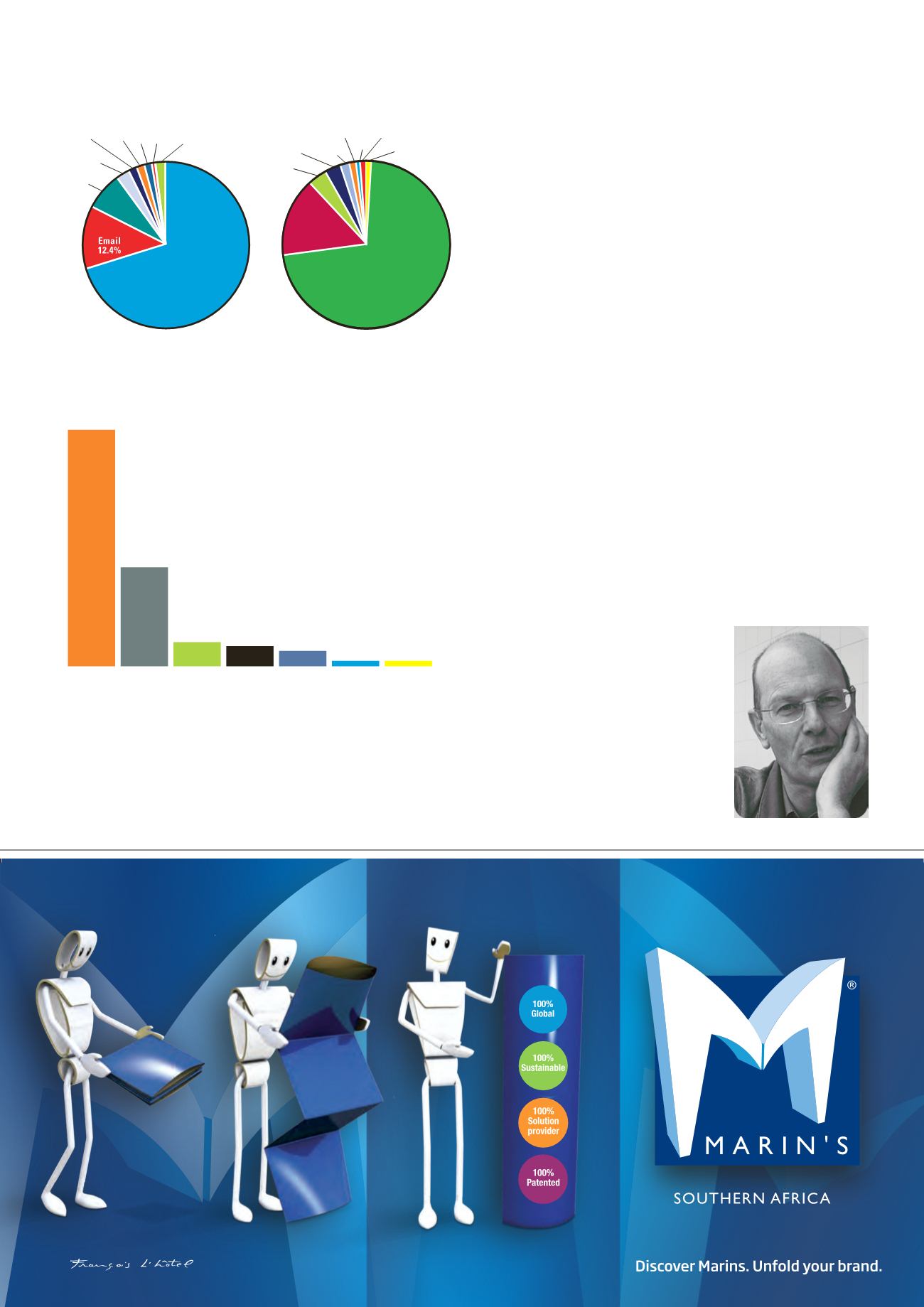
We can see this same pattern when reverting to an outside-in viewpoint. This
insight shows how customer perception drives channel use. Here the Parature
study shows live voice to be twice as popular when ‘speed of response’
becomes a factor. Note how e-mail languishes as a result.
Yet, interestingly a B2B customer of cloud vendor NewVoiceMedia managed
to transform the very same mix by simply providing his customers with a two
hour SLA for e-mail instead of the more common 24+ hour response time. Up to
40 percent of his voice traffic migrated as a result! Is this a one-off situation or
something others can learn from? Maybe the answer is that the performance
of the channel drives use. In other words, customers are pragmatic and will
use whatever works.
If that seems obvious then it should be no surprise to learn from the same
eDigitalResearch report that Chat takes top honours for customer satisfaction.
Why? For one thing, it’s perceived average response time is under a minute. And
it also delivers other benefits. Here is a great observation by Helen Burt, this time
in her role as parent. ‘Live chat is brilliant because it allows you to multitask – In
my case this means not worrying if my toddler is destroying the house in the
background. No need for “mummy’s talking darling!”.’
Ideas to take away
Multi-channel behaviour is part of how digital consumers go about their business.
They expect you to offer choice and consistency. Speed matters. All the research
suggests organisations have much ground to cover before this is common place.
From an infrastructure perspective this means point solutions are now
impediments to the right customer experience. Unified queuing which enables
one set of business rules and one set of reports is the only way to design both
flexible and consistent multi-channel experiences. The good news story for those
ready to move on is that cloud solutions deliver a low-risk route of discovery.
However, the tech is really a downstream decision and should be based on a
prior in-depth view of what customers want in relation to the task they are
trying to achieve with you. So, the immediate task you face is how to develop
the capability to build and maintain that detailed insight.
One thing is for sure. The traditional quest for channel migration is mainly fool’s
gold. Customers choose based on what they see as their best interests not yours.
So, your only chance of success is to think ‘outside-in’. This is not to say you
cannot encourage new customer behaviour. You can if you end-up offering
something better for the customer. But until then, the evidence says that live
voice remains the most trusted way to get what you need as a customer.
Maybe it’s time to change mindset.
Martin Hill-Wilson: Brainfood Consulting
Martin Hill-Wilson is a long-standing member of
the UK customer service community. He currently
works as an independent under the Brainfood brand
with a range of clients focusing on customer related
strategy assignments. He also participates as
conference speaker, workshop facilitator and
blogger in his role of passing on best practice and
next generation thinking. Current topics include
social customer service and the broader issues
involved in becoming a social business.
Martin Hill-Wilson
What channel would you use if
you needed fast or immediate
response?
Telephone
57%e
24%e
6%e 5%e 4%e
1%e 1%e
Email
Live Chat
In Person
Portal
Social
Community
Telephony (Live agent)
70.2%
Telephony
(Self service)
7.3%
Social
media
1.6%
Fax
1.4%
SMS
0.7%
Other
2.0%
Web chat
2.7%
Letter
1.7%
Inbound interactions by channel
Inbound interactions by channel
Social media
0.7%
Web chat
1.3%
Other
0.7% SMS
0.5%
Fax
1.6%
Letter
3.6%
Telephone
(Self service)
3.2%
Email
15.4%
Telephone (agent)
73.0%
Lamà, designed by
PATENTEDSYSTEM


