Brands must look to measurable gamification to reward their most engaged customers
By Lebo Lekoma, Head of Client Services at Sea Monster
As customer expectations continue to evolve rapidly, driven by digitalisation and changing
needs, brands need to find new and exciting ways to communicate and engage with consumers, while providing authentic and personalised experiences that demonstrate the value a brand has
placed on each customer.
According to a Microsoft study, consumers today have an attention span of 8 seconds that
decreases by 88% every year. This means that marketers have a short amount of time to grab
the attention of consumers and reach their customer base. However, it’s also clear that deeper
engagement with consumers is better positioned to lead to consumers taking action.
Games, or gamification, offer up minutes of engagement by enabling brands to provide their customers with immersive experiences that guide users along a particular journey to drive behaviour
change, whether it be to make a purchasing decision or simply engage more with the brand at
the end of the experience.
Gamification uses game design features and gaming principles to tell a brand story, educate,
entertain and engage consumers. Through gamification, brands are able to build trust, loyalty
and create authentic relationships with customers by connecting with them in a way that
rewards their engagement and is not based on pure luck.
Human beings have been engaging in games for thousands of years, from the earliest known
board games played by Egyptians more than 5 000 years ago, to the pc, console and mobile
games of today’s digital age. At their essence, games are rooted in stories, stories that
entertain, educate and help us empathise with others. Stories are also rooted in characters.
Through the representation of games or its cousin gamification, brands can take the personas
of their most engaged users and target audiences, embodying them within a gamified
experience in various ways, whether through visual representation of a customer archetype or
“character” or through the design of the game that speaks to that specific archetype being targeted.
Why does it matter that all of this is measurable?
In today’s competitive landscape, every brand has an incredible marketing mix that comprises of above the line (such as radio and TV), middle (digital media) and below the line (public relations and physical activations) marketing campaigns.
However, this diverse number of customer touchpoints within any brand’s marketing strategy can make it difficult to pinpoint which results are coming from which marketing touchpoint, as well as understanding how any activities across each of these touchpoints are translating to results at the till point.
Additionally, as everything becomes more digitalised and more spend is being diverted into
digital experiences – during a time where budgets are constrained – CMOs are increasingly
prioritising the returns of those digital experiences. By making use of scalable, measurable
gamification, brands will be able to access real-time data and draw important insights into their
customers and can use these actionable metrics to help foster better decision making.
Marketers are often reacquiring their users multiple times. By using gamified experiences,
brands are able to take that spend, which marketers employ to acquire users and maximise the
amount of bites they can grab at the potential engagement of a single acquisition. For example,
it might cost a brand R10 to acquire one user, but when driving that user into a measured
gamified experience, a brand could ensure that, that user returns on average three to five times
through a single acquisition. This has the net effect of reducing the cost of customer acquisition
in the long term.
What are we able to measure with these kinds of experiences?
Gamification takes place in a digital environment. As such, brands are able to measure
everything that the user does in response to content, including what they’re looking at, how
many times they look at it, how many times they return to the content, and so much more. By
making use of digital brand engagement platforms such as Lighthouse, which allows brands to
connect with their customers through gamified content as well as measure and prove return on
investment in one single place, brands are able to build a 360 degree view of the customer.
For example, a simple quiz game can be turned into a very powerful research tool, providing
unique insights into a brand’s customer base. Additionally, gamified experiences aimed at
driving a particular action, such as checking in at a specific location, can be tracked in real time
through a digital dashboard instead of needing to be manually counted at the location. And by
moving competitions to a digital space instead of physical (such as customers having to place
their name and details on a till slip and place it into a box in a store), brands will be able to
implement the appropriate tracking, demonstrate the fairness of the competition, and most
importantly shift the relationship between the customer and the brand to be based on that
customer’s individual effort.
This digital journey enables the brand to audit customer behaviour at every touchpoint of a
marketing campaign, removing the need for guesswork and allowing them to tweak the
campaign in real-time. For instance, if a brand notices, through actionable data, that early in the
campaign they have reached their target numbers through organic engagement, they are able
to make the decision to not deploy media spend initially allocated to the campaign. On the
opposite end of the spectrum, a brand may recognise a dip in engagement at the mid-mark of a
campaign and decide to deploy increased media spend. This ensures longevity of a campaign
and ensures brands get more bang for their buck.
In a world governed by who can make something cheaper or faster, it’s effectively become a
race to the bottom. The question brands need to start asking themselves – in order to do things like reward their most engaged users, build authentic relationships with customers and better understand their customers – is, how are they going to cash in their brand equity in a way that they can measure?
Brands can no longer impress differentiation through price, product or service alone and must distinguish themselves from their competitors by providing consumers with real value in the form of customer-focused experiences.



As artificial intelligence (AI) and the African Continental Free Trade Area (AfCFTA) reshape the marketing BRC confirms 1 January 2027 launch for Total Video Measurement

The Broadcast Research Council of South Africa (BRC) has confirmed that Total Video Measurement (TVM), Jacaranda FM reveals the Top 10 entrepreneurs in this year’s “Her Perfect Pitch” competition

Jacaranda FM has officially announced the Top 10 entrepreneurs selected for the latest edition of its …

By Shobana Sruthi Mohan, Enterprise Analyst at ManageEngine For the past two years, enterprise AI The era of “feel-good marketing”: Why positivity and purpose-driven storytelling is cutting through the noise

From rising living costs and global uncertainty to the relentless pace of the 24-hour news Community involvement cannot sit on the margins of a media business

By Dimakatso Manganyi, HR Manager and Corporate Social Investment Lead at Kaya 959 When more DOOH is rewriting the rules of game day
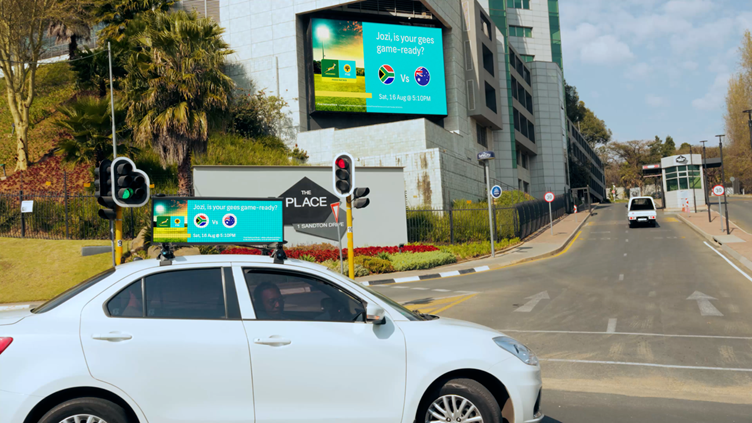
As fans take the action beyond the stands, digital out-of-home gives brands a way to Anthropic and Salesforce announce Claudeforce & Salesforce in Claude

Salesforce and Anthropic are announcing Claudeforce, an expanded strategic partnership bringing Claude’s intelligence and reasoning Why the best business strategy is nothing without a clear execution strategy
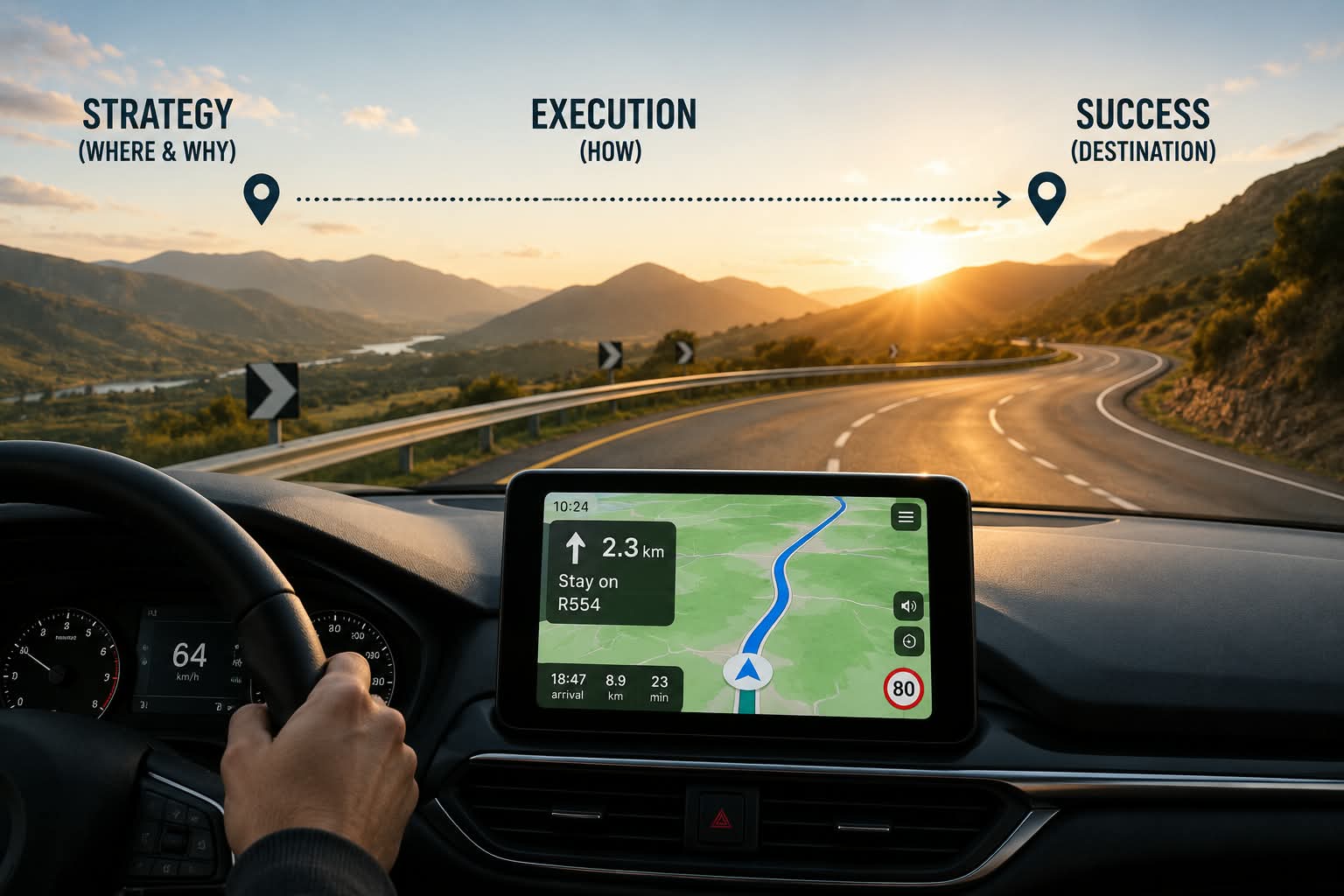
By Thuto Motsie CA (SA), CEO of Thamani When a company develops a business strategy Africa’s AI opportunity starts with infrastructure and independence