


Quincy transforms how the world discovers and organises music
The music industry has just experienced its most significant breakthrough in decades. Quincy, the revolutionary new music classification tool from Triple S Solutions and Gold Tea Productions, is here to transform how we organise, discover and experience music.
In a world where almost 100 000 new tracks are uploaded to streaming platforms every day, traditional methods of managing music catalogues are no longer sustainable. Worse still, inefficient tagging and missing data have contributed to an estimated $2.5 billion in unclaimed royalties across the industry. That’s revenue lost simply because tracks weren’t properly recorded.
Quincy delivers breakthrough music intelligence technology that processes thousands of tracks within minutes, achieving up to 80% accuracy across genre classification, mood analysis, lyrical content and thematic identification. This automated precision significantly outperforms traditional manual sorting methods.
From contemporary Amapiano to nuanced alt-pop, Quincy excels where conventional systems fail, accurately categorising hybrid and niche genres that define today’s diverse musical landscape.
Advanced mood detection identifies the perfect track for any context, from high-energy commercial content to contemplative dramatic pieces. The platform replicates seasoned music supervisors’ intuitive decision-making within an automated framework.
Beyond transcription, Quincy understands meaning. The system recognises complex themes, enabling discovery based on conceptual depth rather than simple keyword matching.
Language is no longer a barrier. Quincy tags and makes searchable songs in any language, bringing equal discoverability to tracks from around the world. Whether it’s a Zulu love song or Japanese indie rock, Quincy ensures no great track gets lost in translation.
‘I was drowning in our vast music catalogue,’ says Dan Joffe, Lead Publisher for Gold Tea Productions, LLC, which operates in both the USA and South Africa. ‘Managing thousands of songs from global artists required something radical. Partnering with Steven Cohen at Triple S Solutions, we created Quincy to do the impossible, especially for underrepresented genres like African music that deserve global attention.’
Manual tagging is extremely slow. Editorial teams often spend weeks labelling large catalogues. With Quincy, that same workload is handled in a matter of hours. You can now search for something as specific as “upbeat Afrosoul track about love in Zulu” and get precise results instantly.
One of the industry’s biggest issues is familiarity bias: music supervisors can’t know every song in a catalogue, which means perfect tracks are often overlooked. Quincy changes that by being entirely impartial. It delivers results based on relevance, not recognition.
With 87% of all tracks on streaming platforms receiving fewer than 1 000 plays per year, there is a vast sea of music that rarely gets heard, let alone licensed. Quincy brings those hidden gems to the surface, creating new opportunities for artists and rights holders alike.
Who Wins? Everyone
– Music supervisors get pinpoint results in record time. Quincy turns the challenge of track discovery into an efficient, enjoyable process.
– Record labels & rights holders gain peace of mind knowing their catalogues are fully tagged and sync-ready for licensing and distribution.
– Artists & creators benefit from fair visibility and discoverability, ensuring their unique voices reach the right audience at the right moment.
– Music lovers ultimately enjoy better-curated content as brilliant but buried tracks finally find their way into films, adverts, shows and playlists.
In an industry where timing and precision are everything, Quincy isn’t just a tool, it is a revolution. No more missed chances due to messy metadata. No more letting underrepresented genres fall by the wayside.
Quincy ensures every song, regardless of language, style or origin, has its chance to shine. Because in the end, great music deserves great organisation. And great organisation needs great technology.
Image credit: Héctor Achautla / Unsplash


For over a decade, digital marketing has been defined by the pursuit of accountability. From Tropika celebrates South African creativity with Dr Esther Mahlangu-inspired murals and branded taxis

Following the highly anticipated launch of its new limited-edition Ginger Beer-flavoured dairy fruit mix, Tropika What we can learn from AI sceptics

By Linda Saunders, Country Manager & Snr. Director Solution Engineering Africa at Salesforce Across the The best PR advice might be: wait

By Lindiwe Mncube, Account Director at Tribeca PR PR has become very good at moving The emotional arc of rewards

By Lianne Booth, Strategic Projects Director at Achievement Awards Group Most rewards programmes are judged Jacaranda FM’s Good Morning Angels raises over R2 million to give 23 South Africans the gift of sound this Mandela Day

In an extraordinary display of generosity and community spirit, Jacaranda FM’s Good Morning Angels has Should brands stay neutral in our divided world?

By Willem Steenkamp, senior writer and editor at Flow Communications Whether or not a brand Africa’s top marketing minds gather to shift the continent’s narrative
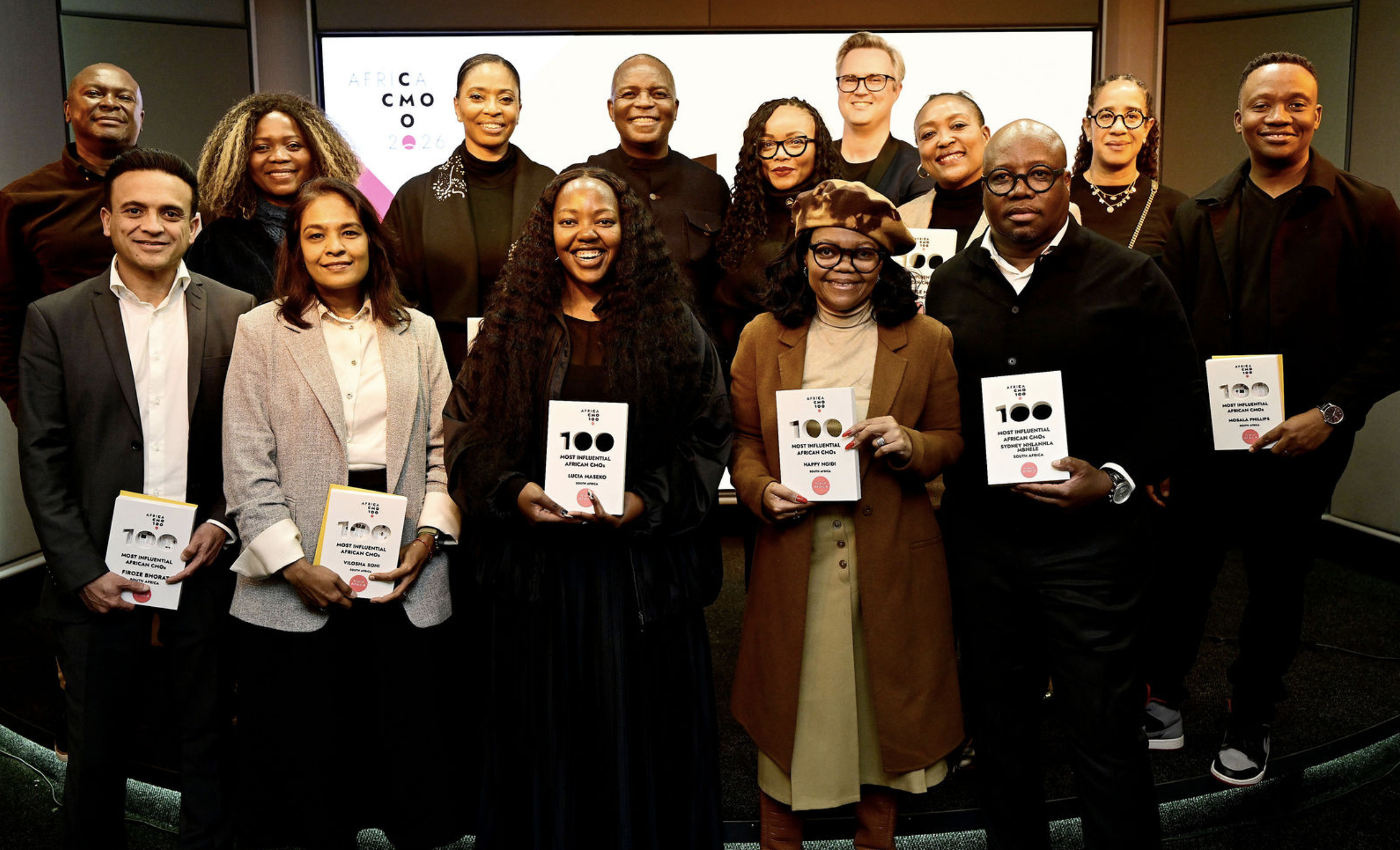
Africa’s leading Chief Marketing Officers are helping shape how societies see themselves, how countries present Regional airports reshape SA’s domestic aviation network

A wave of capital spending at regional airports across George, King Phalo International Airport, Upington Pick n Pay answers rugby’s biggest question in creative new Springbok campaign
